
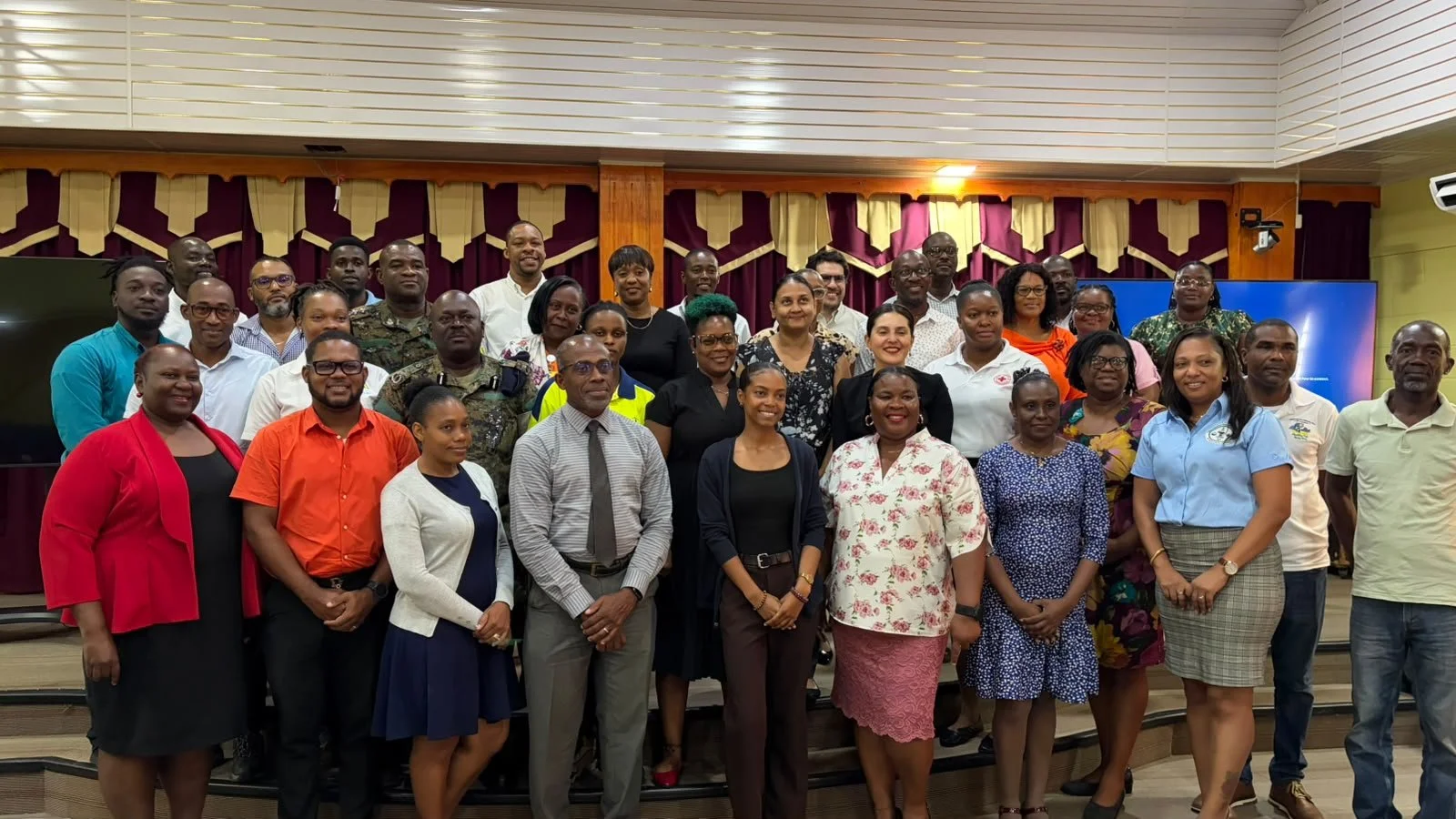
Workshop participants in Saint Vincent and the Grenadines.
On November 10-11, CLEAR-LAC held a workshop in Kingstown, Saint Vincent and the Grenadines, aimed at developing institutional capacities to implement After-Action Reviews (AARs), as part of a technical assistance project supported by Global Support and Development (GSD) for the National Emergency Management Organisation (NEMO).
AARs are a structured approach to institutional learning that enables organizations to examine their response to emergencies, identify gaps, and translate lessons learned into concrete actions to improve Disaster Risk Management.
To develop the methodology, CLEAR-LAC conducted a detailed assessment of the country's key stakeholders, institutional procedures, and existing capacities, complemented by a review of international experiences and practices. This process informed the design of a practical guide and supporting tools tailored to the institutional context of Saint Vincent and the Grenadines. Their implementation will be coordinated by NEMO, with the participation of the institutions that make up the country's national disaster risk management system.
“After-Action Reviews offer an opportunity to accelerate capacity development through institutional learning. They enable institutions themselves to identify gaps and translate them into concrete improvements, helping countries move more quickly and systematically toward more effective disaster risk management”, said Matías Grau, CLEAR-LAC consultant.
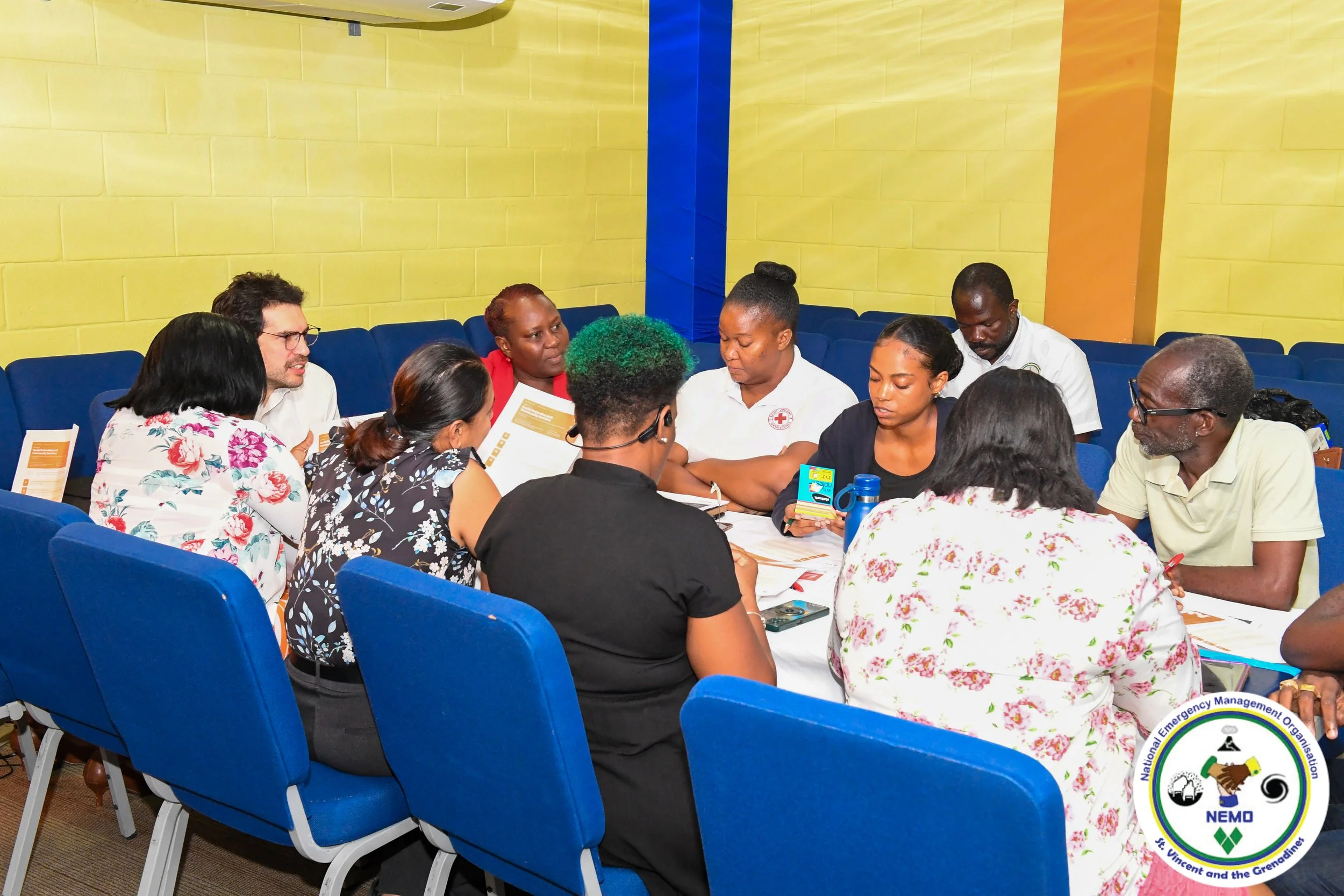
Participants working in interinstitutional groups.
During two days of in-person activities in Kingstown, representatives from NEMO and various institutions involved in disaster risk management participated in a practical exercise based on a fictional emergency scenario. The areas represented included security and emergency response, with institutions such as the Police Force and Coast Guard; social protection and community services, with ministries such as Education, Health, and Family Affairs; essential services, including electricity and water providers; and productive sectors, with ministries such as Tourism and Fisheries, among others.
Participants faced a common challenge: analyzing how their institutions would have responded to Hurricane Tamsin, a Category 4 hurricane that, according to the exercise scenario, would have struck the country on September 10. Working in interinstitutional groups, they examined evidence, identified findings, and developed recommendations and action plans. The exercise provided an opportunity to put the AAR methodology into practice while simultaneously testing the tools developed by CLEAR-LAC and gathering feedback to refine their final version.
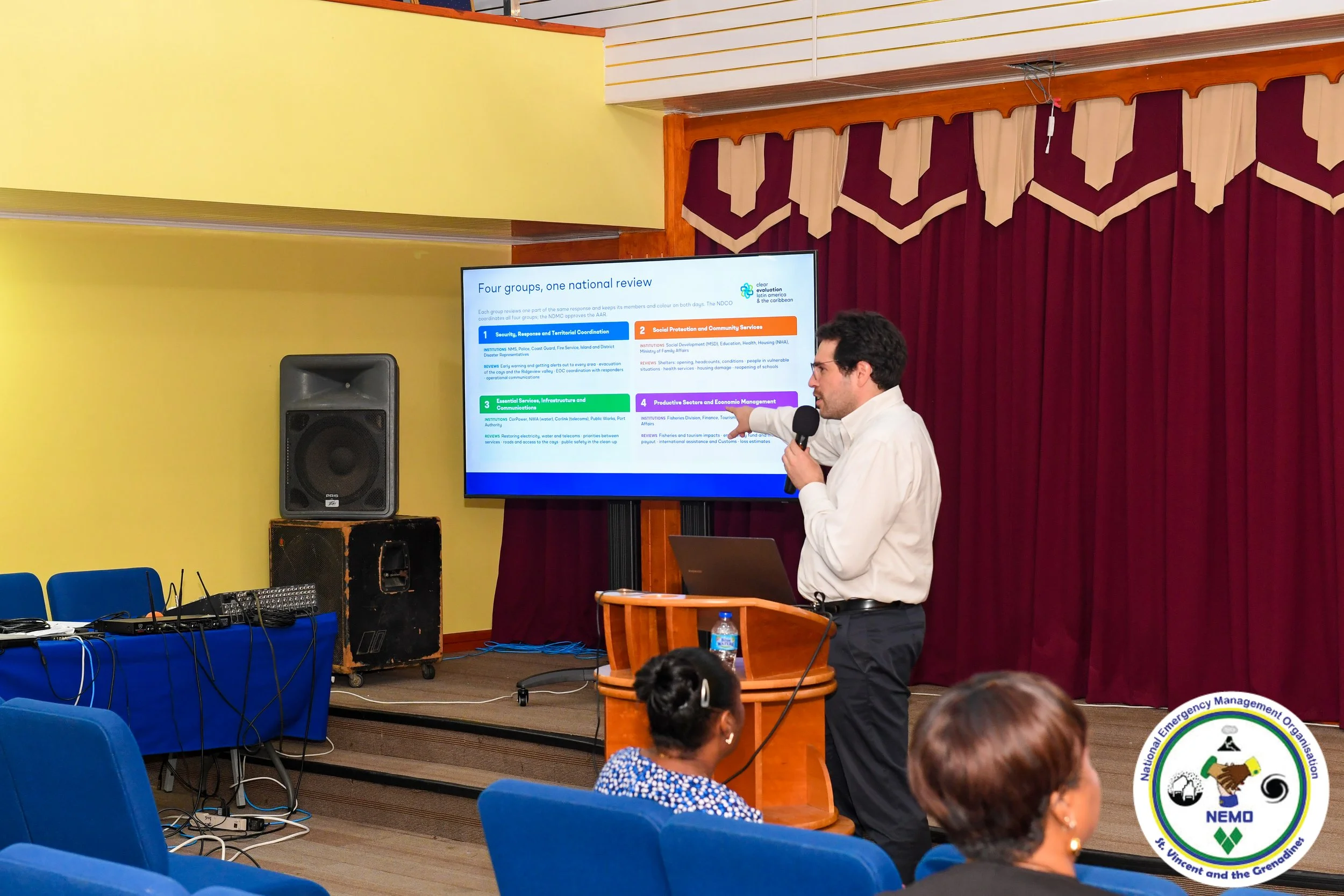
Matías Grau, CLEAR-LAC consultant.
