
CLEAR-LAC and the CDB collaborate for institutionalising Jamaica’s Integrated Results-Based Management Policy
CLEAR-LAC and the Office of Independent Evaluation (OIE) of the Caribbean Development Bank (OIE-CDB) have developed a partnership to strengthen evaluation capacities and monitoring and evaluation (M&E) systems across the Caribbean. Within this collaboration, between May 18 and May 21, 2026, the CLEAR-LAC team participated in a series of high-level technical meetings and knowledge-sharing activities in Jamaica to strengthen the country’s Integrated Results-Based Management (IRBM) system.
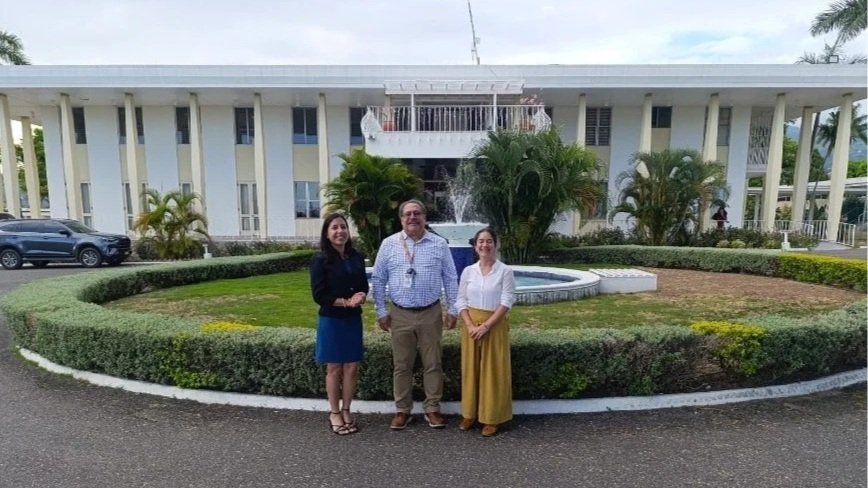
Ms. Silvana Leiva (CLEAR-LAC Evidence Use Professional), Mr. Craig Barham (Office of the Cabinet), and Ms. Shantal Aragón (CLEAR-LAC Evidence Use Director) (from left to right).
Throughout the four days, meetings were held with representatives of the Permanent Secretaries Board (PS Board), the Directors for Planning and Monitoring & Evaluation (M&E), the Office of the Cabinet, the Planning Institute of Jamaica (PIOJ), and several government ministries and agencies participating in the national Planning, Monitoring and Evaluation Community of Practice (PME-CoP). Shantal Aragón, Evidence Use Director, and Silvana Leiva, Evidence Use Professional, represented CLEAR-LAC.
The discussions throughout the visit focused primarily on the institutional strengthening process currently underway in Jamaica to support the implementation of the IRBM Policy. Significant attention was given to the findings emerging from the updated MESA diagnostic assessment and the internal research being developed by the Office of the Cabinet, which identified major challenges related to institutional coordination, fragmented planning and reporting systems, limited technical capacities, operational overload, insufficient staffing, weak integration between planning and budgeting processes, and heavy dependence on manual systems for data management and reporting.
At the same time, participants highlighted several positive developments, including strong leadership engagement, growing institutional appetite for integrated approaches to public management, and the consolidation of the Community of Practice and the annual IRBM Awards as mechanisms to promote a culture of results within government.
CLEAR-LAC played an active role throughout the meetings by presenting the proposed institutional strengthening plan developed jointly with the Government of Jamaica and the OIE-CDB . The presentations introduced the strategic axes of the collaboration, explained how the strengthening strategy builds upon the MESA diagnostic process conducted in previous years, and positioned Jamaica as a potential regional leader in Results-Based Management across the Caribbean. CLEAR-LAC also contributed to discussions on institutional learning, capacity development, governance structures, and the importance of strengthening technical leadership within the public sector.
On May 19, the CLEAR-LAC team presented the Strengthening Plan for the Monitoring & Evaluation (M&E) and Results-Based Management (RBM) System in Jamaica to the Permanent Secretaries Board. The presentation outlined the main components of the strategy, highlighted the importance of collaboration within the framework of the OIE-Caribbean Development Bank’s support, and presented the key strategic pillars of work, as well as CLEAR-LAC’s potential contributions to strengthening Jamaica’s RBM system. Following the presentation, members of the panel raised comments and questions regarding challenges related to capacity development and the need to sustainably strengthen human capital across the public sector.
Another important component of the visit was a working session with the Directors of Planning from different ministries and members of the Planning Institute of Jamaica (PIOJ) on May 20. During this session, the discussion focused on the current maturity level of Jamaica’s RBM system, the lessons learned from the MESA Diagnosis, and the current state of the system, based on evidence gathered through studies being conducted across public administration. These studies aim to identify the main challenges and support progress toward the next level of cooperation and integration within Jamaica’s RBM system.
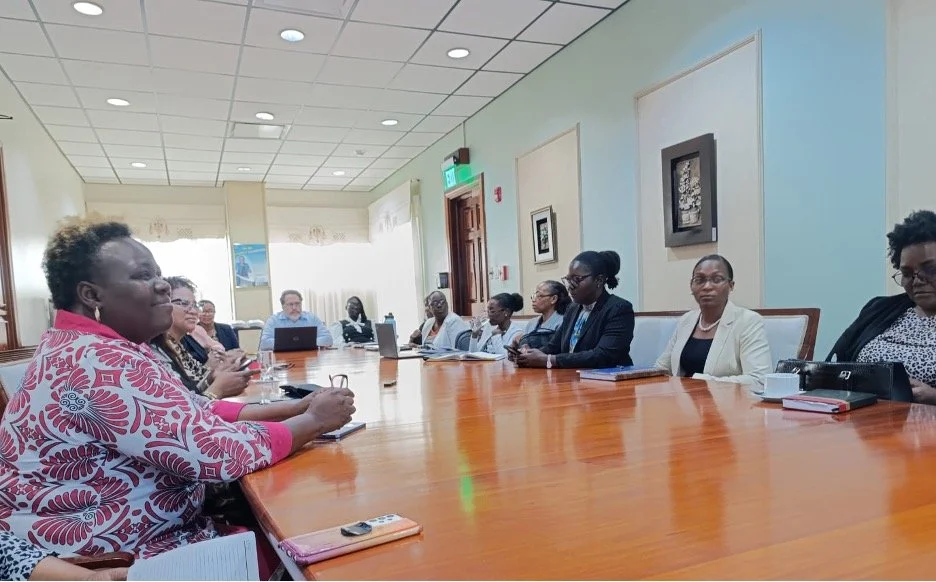
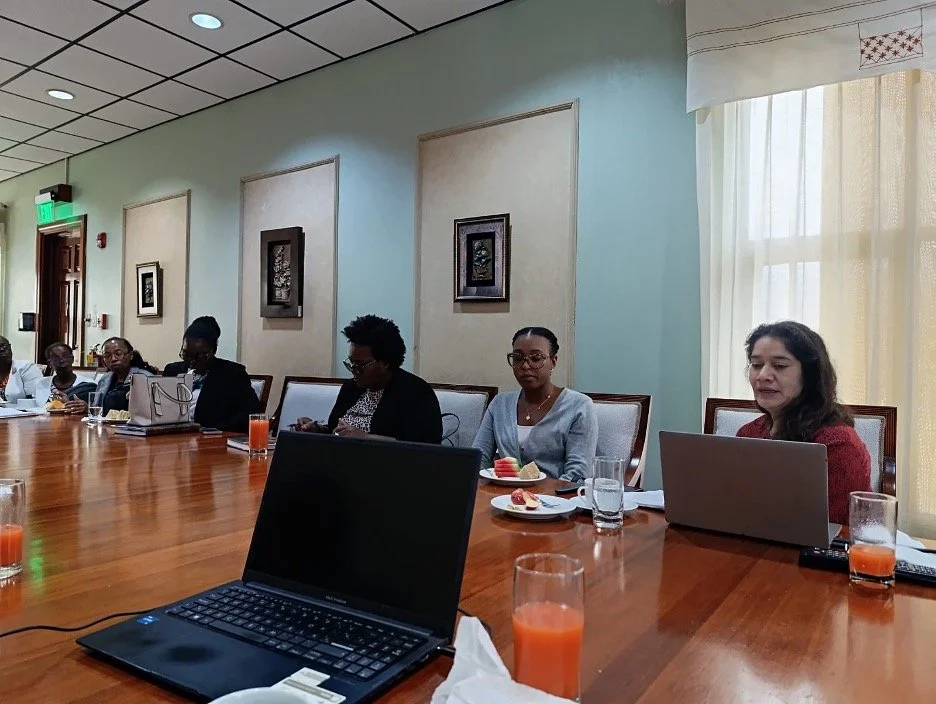
Many of the questions and discussions raised by participants focused on the practical implementation of the Integrated Results-Based Management (IRBM) system and the sustainability of institutional reforms.
Participants expressed particular interest in understanding the MESA methodology, the RBM maturity model, and the requirements for advancing between maturity levels. Questions also centered on how to strengthen executive buy-in, improve cross-sector coordination, reduce duplication in reporting requirements, and establish more integrated digital systems capable of supporting evidence-based decision-making. Another recurring topic was the need to strengthen technical and managerial capacities across government through continuous training programmes, training-of-trainers schemes, and structured learning pathways adapted to different institutional profiles.
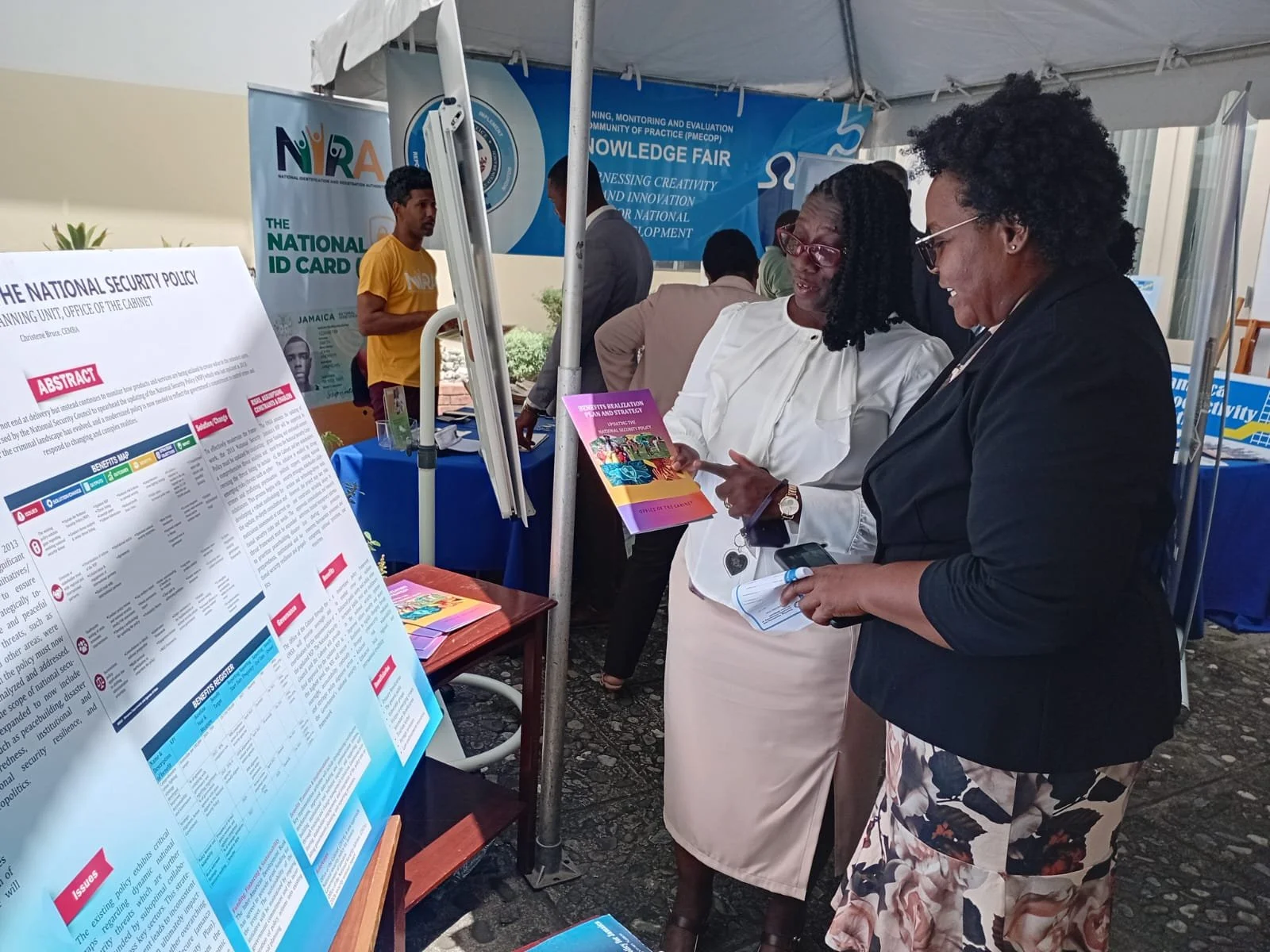
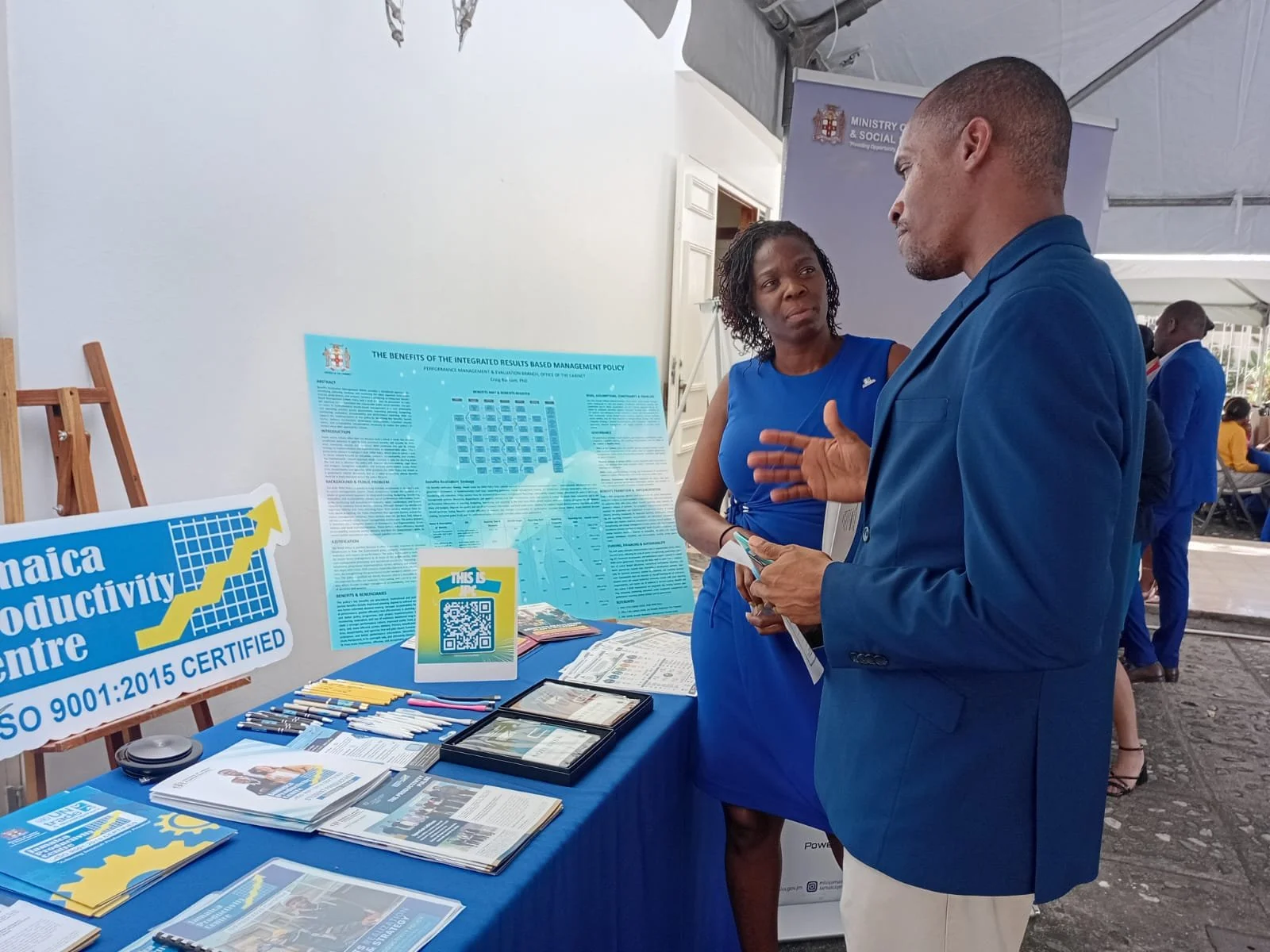
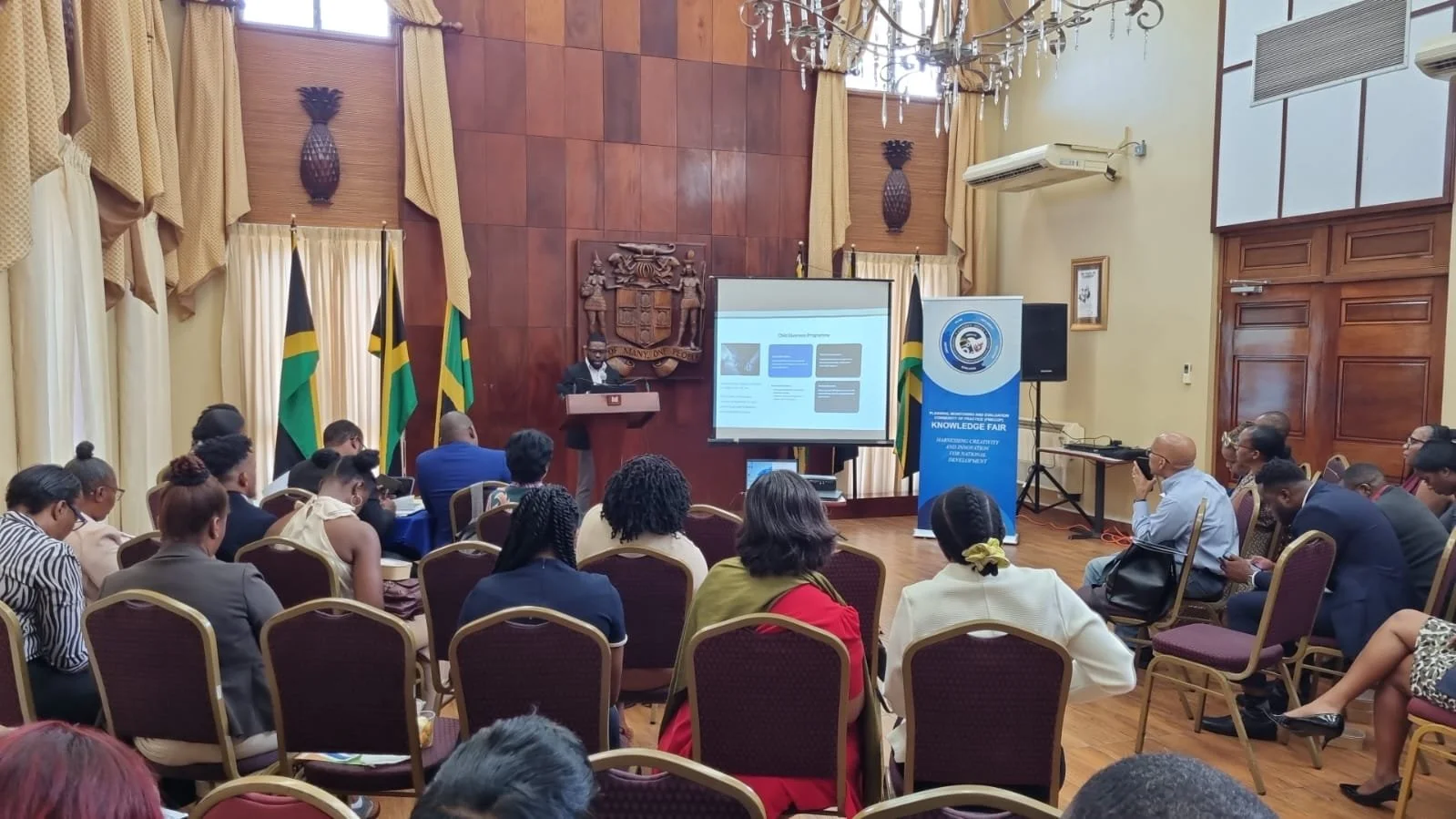
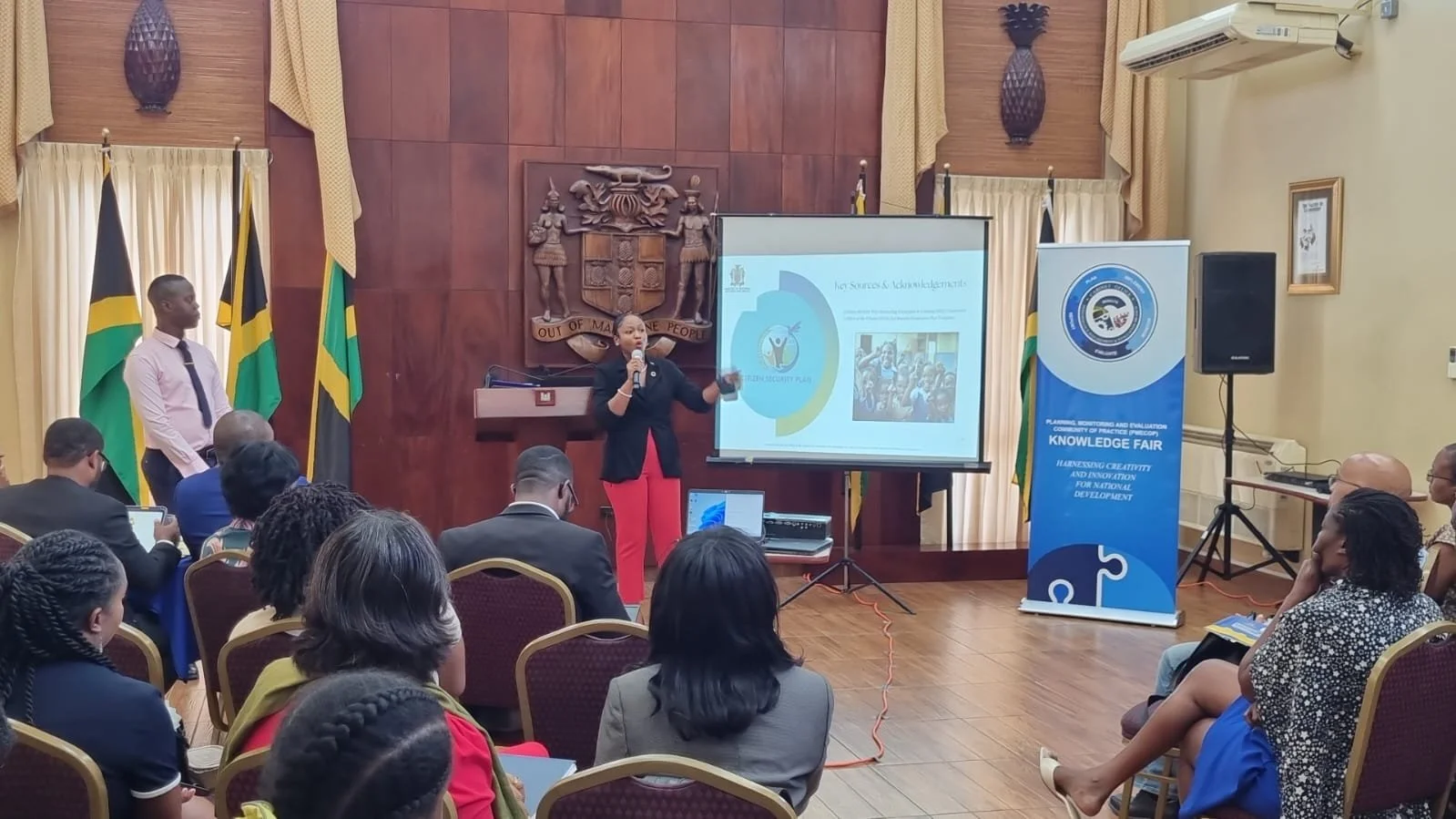
The final day of activities was dedicated to the Knowledge Fair, organised through the Planning, Monitoring and Evaluation Community of Practice. The event showcased several public sector projects focused on citizen security, social inclusion, digital transformation, and institutional modernisation, all presented through the lens of Benefits Realization Management (BRM). The fair also served as a platform for evaluating projects that will compete in the upcoming IRBM Awards. Discussions during the closing panel highlighted the importance of designing public interventions that generate measurable, sustainable benefits for citizens, strengthening evaluation and monitoring and evaluation systems, and ensuring that projects remain aligned with broader development priorities.
Across all meetings and activities, participants agreed on the importance of continuing to strengthen institutional capacities, deepen inter-institutional coordination, and advance the implementation of integrated systems for planning, budgeting, monitoring, and reporting. There was also broad consensus around the need to continue supporting Communities of Practice, expand opportunities for professional learning, and promote locally led leadership and expertise within the Caribbean region.
CLEAR-LAC and its counterparts reaffirmed their commitment to continuing the collaboration, maintaining realistic implementation timelines for the IRBM Policy, and using the findings from the ongoing diagnostic process to guide future institutional strengthening efforts in Jamaica.